Beyond the CV: How UK Hiring Teams Are Testing What You Can Actually Do

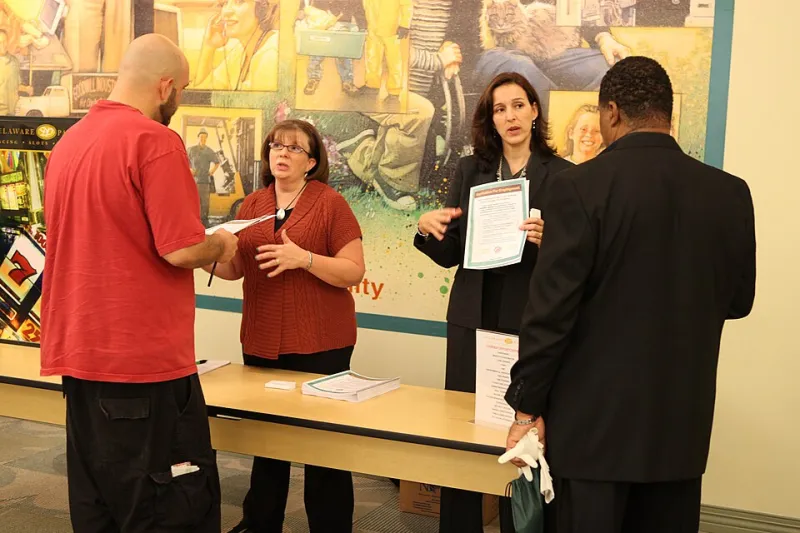
Photo: candidate completing practical skills assessment task at desk in modern UK office, via allbigdogbreeds.com
For most of the past two decades the CV has functioned as a gatekeeper: a two-page document that decides whether a candidate is seen at all. That gate is widening. Across a growing share of the UK labour market in 2026, employers are screening on demonstrated capability — a work sample, a structured interview, a scored exercise — with the CV reduced to a supporting artefact rather than the deciding one.
The shift is uneven, and it is easily overstated. Plenty of organisations still shortlist by reading. But the direction of travel is clear enough to change how applications should be built.
Why screening is moving away from the document
The most immediate driver is credibility. With drafting tools now ubiquitous, a well-written CV is no longer a reliable signal of competence; almost anyone can produce polished prose. Recruiters report that the variance between what a CV claims and what a candidate can do under observation has widened, and screening has adjusted accordingly.
Policy has reinforced the trend. Skills England and the reformed Growth and Skills Levy have pushed employers to articulate roles in terms of occupational standards rather than academic routes, while degree apprenticeships have normalised the idea that capability can be assessed rather than inferred. Professional bodies in accountancy, engineering and healthcare have long done the same through competence frameworks, and that logic has spread into general hiring.
The sectors moving fastest
Technology. Practical assessment is now standard. Expect a time-boxed take-home, a paired session on a shared codebase, or a structured troubleshooting conversation. Mature employers publish the assessment criteria and cap the task at a few hours; the firms worth prioritising are the ones that pay for lengthy exercises or substitute a live session.
Financial and professional services. Assessment centres never disappeared from graduate and apprenticeship intakes, and they are now appearing in mid-career hiring. Numerical reasoning, written case exercises and situational judgement tests are used alongside structured interviews, partly to evidence fair and consistent decision-making to regulators.
Healthcare. Values-based recruitment has been embedded for years, using scenario questions and structured scoring rather than open-ended discussion of a CV. Simulation and observed practice carry significant weight for clinical roles, and support roles increasingly use similar formats.
Construction, energy and utilities. Competence cards, trade tests and site-based assessment dominate, with the CV often functioning as little more than an administrative record.
The civil service. Success Profiles framework — behaviours, strengths, experience, technical and ability — already requires candidates to evidence against a published rubric rather than narrate a career. Private employers increasingly borrow the structure.
What these formats actually measure
Assessment is rarely a pure test of technical skill. Structured exercises are designed to observe judgement under incomplete information, communication with a non-specialist, and approach to a problem with no clean answer. Candidates who prepare only for the skill dimension frequently underperform on the other two.
What a credible skills profile looks like
A modern application needs an evidence base, not a summary. In practice that means:
- Artefacts. A portfolio, a case note, a repository, a process you redesigned. Tangible outputs are more persuasive than descriptions of them.
- Outcomes with numbers. "Reduced month-end close from nine days to six" survives a structured interview far better than "responsible for month-end close".
- Mapping. A short table aligning your evidence to the employer's person specification makes the recruiter's job easier and demonstrates the analytical care you are claiming.
- Specific tooling. Name the systems, frameworks and methodologies you have used, and be prepared to discuss their limitations as well as their strengths.
- Adjacent capability. Transferable skills matter most where an employer is hiring for trajectory rather than a perfect match.
- Micro-credentials, contextualised. A certificate is a starting point; a short account of how you applied it is what makes it persuasive.
Where the approach can fail
Skills-based hiring is not automatically fairer. Unstructured assessment introduces its own bias, and candidates from less privileged backgrounds may have fewer opportunities to rehearse these formats. Accessibility is a live issue: timed tests can disadvantage candidates with disabilities unless adjustments are offered and clearly signposted. Requests for extensive unpaid work are a legitimate grievance, particularly where the task closely resembles billable output. Candidates should feel entitled to ask how long an exercise takes, who reviews it and whether feedback follows.
Adapting without becoming a specimen
The risk in preparing heavily for assessment is that the individual disappears behind technique. Structured interviews are scored on evidence, but appointments are still made to people.
Read the person specification as a rubric. It usually is one. Mirror its language, and ensure each criterion has at least one concrete example attached.
Build three signature stories. Choose situations that show judgement, not just success, and rehearse them aloud until the details are natural rather than recited.
Ask about the process. Request the assessment criteria and any reasonable adjustments. Employers that welcome the question are usually the ones running a fair process.
Keep the motivation visible. Assessors consistently notice candidates who can articulate why this role, in this organisation, at this point in their career. Evidence earns the score; reasoning earns the offer.
Close the loop. A brief, specific note after assessment — referencing something discussed rather than restating enthusiasm — is read more often than candidates assume.
The practical conclusion
For UK candidates, the sensible response is not to abandon the CV but to demote it. Treat it as an index that points towards evidence you can produce on request: a piece of work, a measured outcome, a considered answer under observation. The employers leading this change are not asking for less preparation. They are asking for a different kind of it — and for the story behind the evidence to remain intact.